
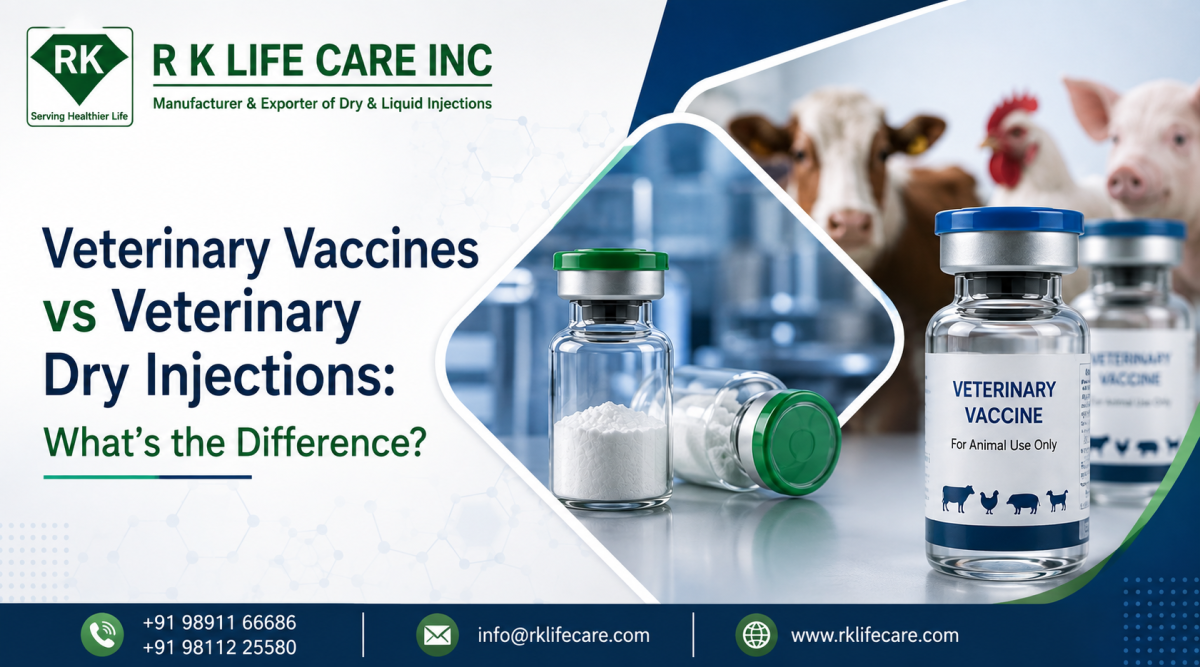
Animal healthcare has advanced significantly over the years, with a wide range of pharmaceutical products available to prevent and treat diseases in livestock, poultry, and companion animals. Among the most commonly used injectable veterinary products are veterinary vaccines and veterinary dry injections. While both are administered through injections, they serve different purposes and are manufactured using distinct formulations.
Understanding the difference between veterinary vaccines and veterinary dry injections is important for veterinarians, livestock owners, and animal healthcare professionals. Choosing the right product at the right time can improve treatment outcomes, enhance animal welfare, and support better disease management.
What Are Veterinary Vaccines?
Veterinary vaccines are biological preparations designed to protect animals from infectious diseases. They work by stimulating the animal's immune system to recognize and fight specific pathogens before an actual infection occurs.
Vaccines may contain weakened (live attenuated), inactivated (killed), or modified forms of bacteria or viruses, as well as purified proteins or recombinant antigens. Once administered, they help the immune system develop antibodies and immune memory, reducing the likelihood of future infections.
Veterinary vaccines are commonly used to prevent diseases such as foot-and-mouth disease, rabies, Newcastle disease, canine parvovirus, and bovine respiratory infections. Regulatory oversight of these biological products — including licensing and quality standards — is coordinated internationally through bodies like the World Organisation for Animal Health (WOAH) and, in the US, through USDA APHIS's Center for Veterinary Biologics.
Unlike therapeutic medicines, vaccines are preventive in nature and are usually administered according to a vaccination schedule.
What Are Veterinary Dry Injections?
Veterinary dry injections are freeze-dried or lyophilized pharmaceutical formulations that require reconstitution with a sterile diluent before administration. These injections are primarily used for treating existing diseases rather than preventing them. For a deeper look at how this drying process works, see our earlier post on the lyophilization process behind freeze-dried injections.
Dry injections often contain antibiotics, antiparasitic drugs, anti-inflammatory medications, hormones, or other therapeutic compounds that may lose stability in liquid form — we cover several of the most widely used ones in our guide to common antibiotics available as dry injections. Freeze-drying helps preserve the drug's potency and extends its shelf life.
Many pharmaceutical manufacturers, including RK Life Care Inc, produce dry injectable formulations using validated manufacturing processes and quality standards to maintain product stability and sterility throughout storage and transportation. You can explore our full range of veterinary dry injections and our veterinary injection manufacturing capabilities for more detail.
Key Differences Between Veterinary Vaccines and Veterinary Dry Injections
Although both products are injectable, their objectives, composition, and usage differ significantly.
1. Purpose
The biggest difference lies in their purpose.
- Veterinary vaccines help prevent infectious diseases by building immunity.
- Veterinary dry injections are used to treat diseases or manage specific medical conditions after diagnosis.
Vaccines are preventive, whereas dry injections are therapeutic.
2. Composition
Veterinary vaccines contain biological materials such as weakened microorganisms, killed pathogens, or purified antigens that trigger an immune response.
In contrast, veterinary dry injections usually contain pharmaceutical active ingredients like antibiotics, antifungals, vitamins, hormones, or pain-relieving agents that directly address an illness or deficiency.
3. Manufacturing Process
The manufacturing process for vaccines involves biological production, purification, quality testing, and strict cold-chain requirements.
Dry injections are manufactured through sterile formulation, aseptic filling, lyophilization (freeze-drying), sealing, and extensive quality control testing. The freeze-drying process removes moisture while preserving the stability of sensitive medicines.
Companies involved in sterile pharmaceutical manufacturing, such as RK Life Care Inc, emphasize controlled production environments to ensure consistent product quality for dry injectable formulations. Correct handling doesn't stop at manufacturing either — our step-by-step guide on how to reconstitute dry powder injections safely covers what happens after the vial leaves the factory.
4. Storage Requirements
Many veterinary vaccines require refrigeration throughout storage and transportation to maintain their effectiveness.
Dry injections generally offer greater stability because the freeze-drying process significantly reduces moisture content. However, storage recommendations vary depending on the active ingredient and manufacturer guidelines.
Proper storage is essential for both products to ensure safety and efficacy.
5. Shelf Life
Freeze-dried veterinary injections often have a longer shelf life compared to liquid formulations because removing water slows chemical degradation. For a closer comparison of these formulation trade-offs, see dry injection vs liquid injection: key differences every buyer should know.
Vaccines may also have extended shelf lives when stored correctly, but many remain highly sensitive to temperature fluctuations and must be handled carefully.
6. Administration
Vaccines are usually administered according to preventive healthcare schedules recommended by veterinarians.
Dry injections, on the other hand, are prescribed after diagnosing a specific illness and are administered based on the animal's condition, body weight, and treatment protocol.
Using either product without professional veterinary guidance can reduce effectiveness and may pose risks to animal health.
Advantages of Veterinary Vaccines
Veterinary vaccines provide several important benefits, including:
- Prevention of infectious diseases
- Reduced disease outbreaks in livestock and poultry
- Improved herd immunity
- Lower treatment costs over time
- Better productivity and animal welfare
- Reduced economic losses for farmers
Vaccination remains one of the most effective strategies for controlling contagious animal diseases.
Advantages of Veterinary Dry Injections
Veterinary dry injections also offer several practical advantages.
Some of the key benefits include:
- Enhanced drug stability
- Longer shelf life
- Reduced moisture-related degradation
- Easy transportation
- Rapid reconstitution before use
- Effective treatment for bacterial and other infections
These characteristics make freeze-dried injectable medicines suitable for various veterinary therapeutic applications.
Which One Should Be Used?
There is no direct competition between veterinary vaccines and veterinary dry injections because they address different healthcare needs.
Vaccines are intended to prevent disease before infection occurs, while dry injections help manage and treat diseases that have already developed. In many veterinary treatment programs, both products are used together as part of a comprehensive animal healthcare strategy.
Veterinarians determine the appropriate option based on factors such as the animal's age, species, health status, vaccination history, and the nature of the disease.
Conclusion
Although veterinary vaccines and veterinary dry injections are both administered through injections, they serve entirely different purposes in animal healthcare. Vaccines strengthen the immune system to prevent infectious diseases, whereas dry injections provide treatment for existing medical conditions.
Understanding these differences helps livestock owners, veterinarians, and animal healthcare professionals make informed decisions that support better disease prevention and treatment outcomes. As veterinary medicine continues to evolve, manufacturers like RK Life Care Inc contribute to the industry by following established pharmaceutical manufacturing standards for quality, safety, and consistency. Whether the goal is prevention through vaccination or treatment using freeze-dried injectable medicines, selecting the appropriate product under veterinary guidance is essential for maintaining healthy animals and improving overall farm productivity.
Comments
No comments yet. Be the first to share your thoughts!
Leave a Comment