
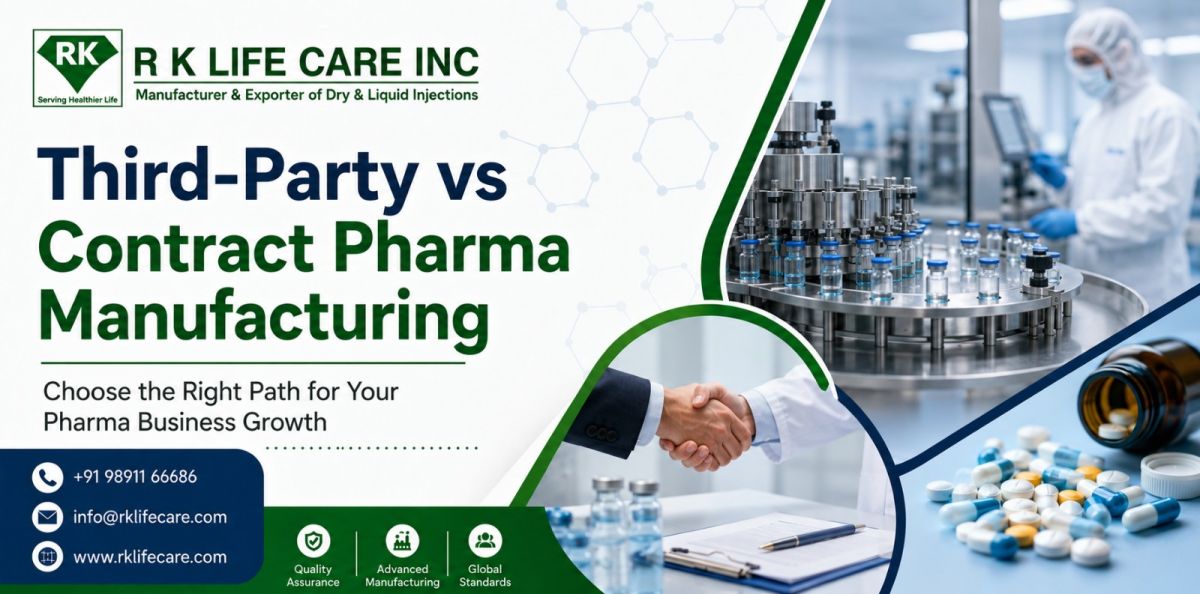
The pharmaceutical industry thrives on strategic collaborations, clinical precision, and scalable operations. For pharmaceutical marketing companies, growing startups, and established enterprises looking to expand their product portfolios without investing massive capital into physical plant construction, outsourcing production has become an essential business model. However, navigating the landscape of manufacturing partnerships often brings up a common strategic dilemma: choosing between third-party pharma manufacturing and contract manufacturing.
Understanding the structural, operational, and commercial differences between these two pathways is vital for long-term brand success. Specialized facilities equipped with advanced infrastructure—such as the WHO-GMP and ISO-certified plant operated by RK Life Care Inc in Jhajjar, Haryana—frequently support both models, helping domestic and international partners scale their pharmaceutical lines efficiently.
Defining Third-Party Pharma Manufacturing
Third-party manufacturing, often referred to as contract manufacturing for ready-made formulations, occurs when a manufacturing enterprise produces goods under its own pre-developed product formulas or generic portfolios, and a marketing partner sells those finished products under its own brand name.
-
How the Model Operates: The manufacturing unit already possesses the drug formulations, stability data, regulatory approvals, and standard packaging layouts. A marketing partner selects specific items from this pre-existing catalog, and the manufacturing plant produces them using the partner’s custom brand labeling.
-
Key Strategic Advantages:
-
Lower Barriers to Entry: Because product development, formulation testing, and initial regulatory approvals are already complete, emerging brands can introduce products to the market rapidly.
-
Minimal R&D Expenditure: Companies do not need to invest capital in dedicated laboratory research, chemical testing, or initial formulation trial runs.
-
Ideal for Marketing Startups: This model is exceptionally well-suited for pharmaceutical distributors, medical representatives, and new enterprises aiming to build a marketable product line quickly with minimal upfront overhead.
-
Defining Pharma Contract Manufacturing (CDMO)
Pharma contract manufacturing, frequently structured through Contract Development and Manufacturing Organization (CDMO) agreements, is a much more customized, collaborative arrangement. In this scenario, the client provides the specific chemical formula, proprietary specifications, or custom research parameters, and the manufacturing facility builds, processes, and packages the product precisely to those unique guidelines.
-
How the Model Operates: The partnership involves deep technical collaboration. The client dictates exact raw material specifications, unique processing methods (such as specialized lyophilization cycles), custom vial sizes, or distinct packaging designs. The contract manufacturer acts as a direct extension of the client's own production environment.
-
Key Strategic Advantages:
-
Full Product Ownership and Customization: The brand retains complete ownership of the intellectual property, proprietary formulation, and unique technical parameters.
-
High Scalability for Established Brands: Suited for mid-to-large-scale pharmaceutical companies that require dedicated production lines to match high-volume commercial demand across domestic or global markets.
-
Advanced Technical Adaptability: Allows for specialized manufacturing processes, such as complex dry powder sterile vial filling, anti-infectives, critical care medications, and veterinary formulations.
-
Comparative Overview: Key Operational Differences
| Parameter | Third-Party Pharma Manufacturing | Contract Manufacturing (CDMO) |
| Product Formulation | Utilizes the manufacturer’s established generic or brand-ready formulations. | Built entirely on the client’s custom specifications, recipes, or proprietary data. |
| Time-to-Market | Rapid; products are cataloged and ready for immediate labeling and commercial distribution. | Longer; requires custom tech transfer, laboratory trial batches, and validation runs. |
| Control & Customization | Limited primarily to branding, artwork, and packaging choices on pre-existing lines. | High; complete oversight over product parameters, raw ingredients, and processing steps. |
| Target Audience | Ideal for startups, marketing firms, and regional distributors expanding portfolios. | Ideal for established companies, innovators, and global exporters needing scalable production. |
Technical Excellence and Quality Compliance in Modern Facilities
Whether a brand opts for a third-party catalog selection or a custom contract manufacturing agreement, partnering with a certified facility is non-negotiable. Modern manufacturing plants—such as the production unit managed by RK Life Care Inc in the Reliance Modern Industrial Area (MET) of Jhajjar, Haryana—integrate advanced infrastructure to maintain strict compliance with global standards, including WHO-GMP, ISO, and GLP certifications.
Key technical aspects managed within these facilities include:
-
Sterile Processing Environments: High-end HVAC systems equipped with HEPA filtration ensure strict particulate and microbial control during sensitive procedures, protecting product purity during dry powder injection filling and freeze-drying.
-
Regulatory Dossier Support: Comprehensive documentation—such as Common Technical Document (CTD) dossiers, Drug Master Files (DMF), and stability validation data—helps partners navigate regulatory requirements smoothly across diverse export markets.
-
Rigorous Quality Assurance: In-process controls, sterility tests, and container closure integrity testing (CCIT) protect product safety across diverse therapeutic categories, ranging from critical care injectables to specialized veterinary treatments.
Making the Right Choice for Your Pharmaceutical Brand
Deciding between third-party manufacturing and custom contract manufacturing depends heavily on your current business stage, capital availability, and long-term commercial goals:
-
Choose Third-Party Manufacturing if your primary objective is speed, low overhead costs, and immediate market entry using trusted, pre-formulated pharmaceutical lines. This path allows new brands to establish market presence efficiently.
-
Choose Contract Manufacturing if you possess a proprietary formula, require specialized technical adaptations (such as custom lyophilization parameters or unique dosages), and need a dedicated manufacturing partner to scale large commercial volumes.
By aligning with an experienced, compliant production partner capable of supporting flexible batch sizes and international export requirements, pharmaceutical brands can optimize their supply chains and deliver safe, high-efficacy medications to healthcare markets worldwide.
Partnering for Long-Term Success with RK Life Care Inc
Navigating the complexities of pharmaceutical production requires a partner that combines technical infrastructure with uncompromising quality standards. Headquartered in Rohini, New Delhi, with advanced manufacturing units in Jhajjar, Haryana, RK Life Care Inc continues to support both domestic networks and international distribution channels across more than 20 countries. Whether you are looking to scale an existing portfolio through trusted third-party options or seeking a reliable contract manufacturing collaborator for specialized critical care formulations, engaging with an industry leader ensures your brand maintains a competitive edge while prioritizing patient health and safety globally.
To discuss your upcoming third-party or contract manufacturing requirements, reach out to the team at RK Life Care Inc to explore how our certified manufacturing capabilities can support your business growth.
Comments
No comments yet. Be the first to share your thoughts!
Leave a Comment