
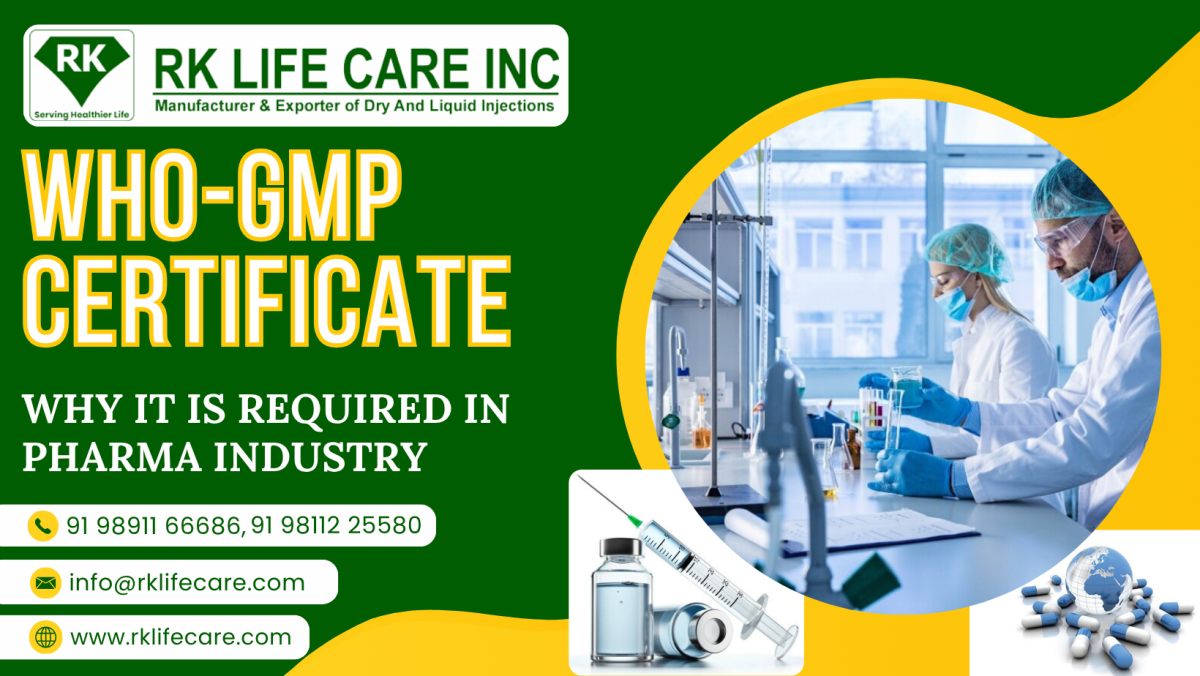
Have you ever wondered how medicines maintain consistent quality across different countries? In the pharmaceutical industry, even a small compromise in quality can have serious consequences for human health. This is where the WHO-GMP certificate plays a vital role.
The WHO-GMP (World Health Organization – Good Manufacturing Practices) certification ensures that pharmaceutical products are manufactured and controlled according to strict global quality standards. In this blog, we’ll explore the WHO-GMP certificate's meaning, its importance, its benefits, and why it is essential in the pharmaceutical industry.
What is a WHO-GMP Certificate
The WHO-GMP certificate is an internationally recognized standard issued to pharmaceutical manufacturers that comply with the Good Manufacturing Practices (GMP) guidelines set by the World Health Organization.
These guidelines ensure that medicines are:
- Safe for consumption
- Consistently high in quality
- Manufactured under controlled conditions
- Free from contamination and errors
In simple terms, WHO-GMP acts as a quality assurance system that covers every stage of pharmaceutical production—from raw materials to final product distribution.
Key WHO-GMP Guidelines in Pharma
To understand the importance of WHO-GMP, let’s break down its core components:
1. Quality Management System
A robust system ensures that every process is monitored, controlled, and continuously improved.
2. Standard Operating Procedures (SOPs)
Clear and documented procedures help maintain consistency in manufacturing.
3. Hygiene and Sanitation
Strict cleanliness protocols reduce the risk of contamination.
4. Equipment Validation
All machinery must be regularly tested and maintained for accuracy.
5. Documentation & Record Keeping
Every step is recorded to ensure traceability and accountability.
Why WHO-GMP Certification is Important in the Pharmaceutical Industry
1. Ensures Drug Safety and Quality
The primary objective of WHO-GMP is to ensure that medicines are produced safely and meet quality standards. This reduces risks like incorrect dosage, contamination, or impurities.
2. Builds Trust and Credibility
Pharmaceutical companies with WHO-GMP certification gain trust from doctors, patients, and global partners.
3. Supports Global Market Access
Many countries require WHO-GMP certification for importing medicines. It opens doors to international business opportunities.
4. Regulatory Compliance
It helps companies meet national and international regulatory requirements, avoiding legal issues and penalties.
5. Reduces Risk of Product Recalls
Strict quality checks at every stage minimize the chances of defective products reaching the market.\
Benefits of WHO-GMP Certification
Implementing WHO-GMP guidelines offers multiple long-term advantages:
- Improved product consistency
- Enhanced brand reputation
- Better operational efficiency
- Increased customer confidence
- Higher chances of international approvals
In today’s competitive pharma landscape, WHO-GMP is not just a certification—it is a strategic advantage.
WHO-GMP Certification in the Indian Pharmaceutical Industry
India is known as the “Pharmacy of the World,” supplying medicines globally. To maintain this reputation, adherence to WHO-GMP standards is essential.
WHO-GMP certification helps Indian pharmaceutical companies:
- Compete in international markets
- Participate in global tenders
- Maintain export quality standards
- Strengthen global credibility
WHO-GMP Certification Process
Getting WHO-GMP certified involves a structured process:
- Application Submission – The company applies to the regulatory authority
- Documentation Review – SOPs, quality systems, and processes are evaluated
- Facility Inspection – On-site inspection of manufacturing units
- Gap Analysis – Identification and correction of non-compliance issues
- Certification Approval – Certificate is issued upon full compliance
This ensures only high-quality manufacturers receive certification.
RK Life Care Inc: Commitment to WHO-GMP Standards
In the modern pharmaceutical landscape, companies like Rk Life Care Inc are actively aligning their manufacturing practices with WHO-GMP standards.
By following strict quality protocols, such organizations:
- Ensure safe and effective medicines
- Maintain international quality benchmarks
- Build long-term trust in global markets
Their approach reflects how WHO-GMP certification is not just about compliance—but about delivering excellence in healthcare.
Challenges in Maintaining WHO-GMP Compliance
While WHO-GMP offers many benefits, maintaining compliance can be challenging:
- High infrastructure and operational costs
- Continuous staff training requirements
- Strict documentation and audits
- Frequent inspections and updates
However, these challenges are necessary to ensure patient safety and product reliability.
Conclusion
The WHO-GMP certificate is a cornerstone of quality in the pharmaceutical industry. It ensures that medicines are consistently produced under strict safety and quality guidelines.
In an industry where lives are at stake, WHO-GMP is not optional—it is essential. For companies like Rk Life Care Inc and others, adopting WHO-GMP standards means committing to global excellence, patient safety, and long-term success.
As the demand for high-quality medicines continues to grow worldwide, the importance of WHO-GMP certification will only increase. Simply put, it is the foundation of trust in modern pharmaceutical manufacturing.
Comments
No comments yet. Be the first to share your thoughts!
Leave a Comment