
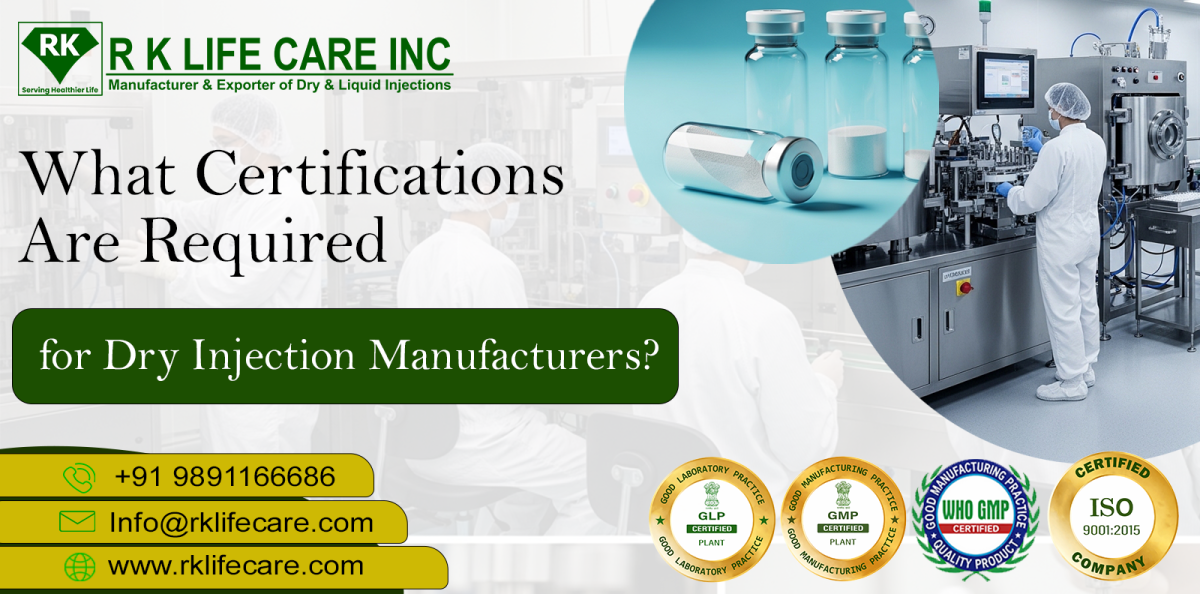
Dry injection manufacturing is one of the most sensitive and highly regulated segments of the pharmaceutical industry. Since these products are administered directly into the body, maintaining sterility, safety, and efficacy is critical. To ensure compliance with global quality standards, manufacturers must obtain specific certifications that validate their processes, facilities, and quality management systems.
One of the most essential certifications is the World Health Organization Good Manufacturing Practice (WHO-GMP). This certification ensures that pharmaceutical products are consistently produced and controlled according to quality standards. WHO-GMP focuses on hygiene, equipment validation, documentation, staff training, and contamination control—all crucial for dry injections. Without GMP certification, a manufacturer cannot legally produce or export injectable medicines in most markets.
Another important certification is the International Organization for Standardization ISO 9001: Quality Management System. While GMP focuses specifically on pharmaceutical production, ISO 9001 ensures that the company follows a systematic approach to quality management across all operations. It emphasizes customer satisfaction, process consistency, and continuous improvement, which enhances the credibility of the manufacturer in both domestic and international markets.
For companies aiming to export products to regulated markets like the US or Europe, additional certifications are required. The United States Food and Drug Administration US FDA approval is one of the most recognized global standards. It involves rigorous inspections, validation processes, and compliance with strict regulatory requirements. Similarly, the European Medicines Agency EU GMP certification is mandatory for exporting pharmaceutical products to European countries. These certifications demonstrate that the manufacturing facility meets advanced global standards for safety and quality.
In India, manufacturers must comply with regulations set by the Central Drugs Standard Control Organization CDSCO. Obtaining a valid drug manufacturing license from CDSCO is mandatory for operating legally. The authority ensures that pharmaceutical companies follow Schedule M guidelines, which align closely with GMP standards.
Sterile product manufacturers, including dry injection producers, often pursue ISO 13485 certification, which is specifically designed for medical devices and sterile manufacturing environments. While not always mandatory for pharmaceuticals, it adds an extra layer of trust, especially for companies dealing with advanced sterile technologies.
Environmental and safety certifications are also becoming increasingly important. Certifications like ISO 14001 (Environmental Management System) and ISO 45001 (Occupational Health and Safety) demonstrate a company’s commitment to sustainable and safe manufacturing practices. These certifications are particularly valuable when working with international partners who prioritize environmental responsibility.
Additionally, some manufacturers opt for Pharmaceutical Inspection Co-operation Scheme PIC/S certification, which harmonizes inspection procedures across participating countries. This certification helps companies expand into multiple international markets more easily by ensuring mutual recognition of quality standards.
In conclusion, dry injection manufacturers must obtain a combination of regulatory and quality certifications to operate successfully. At a minimum, WHO-GMP and local regulatory approvals like CDSCO are essential. However, for global expansion, certifications such as US FDA, EU GMP, and ISO standards significantly enhance credibility and market access. These certifications not only ensure compliance but also build trust among healthcare providers, distributors, and patients worldwide.
Comments
No comments yet. Be the first to share your thoughts!
Leave a Comment