
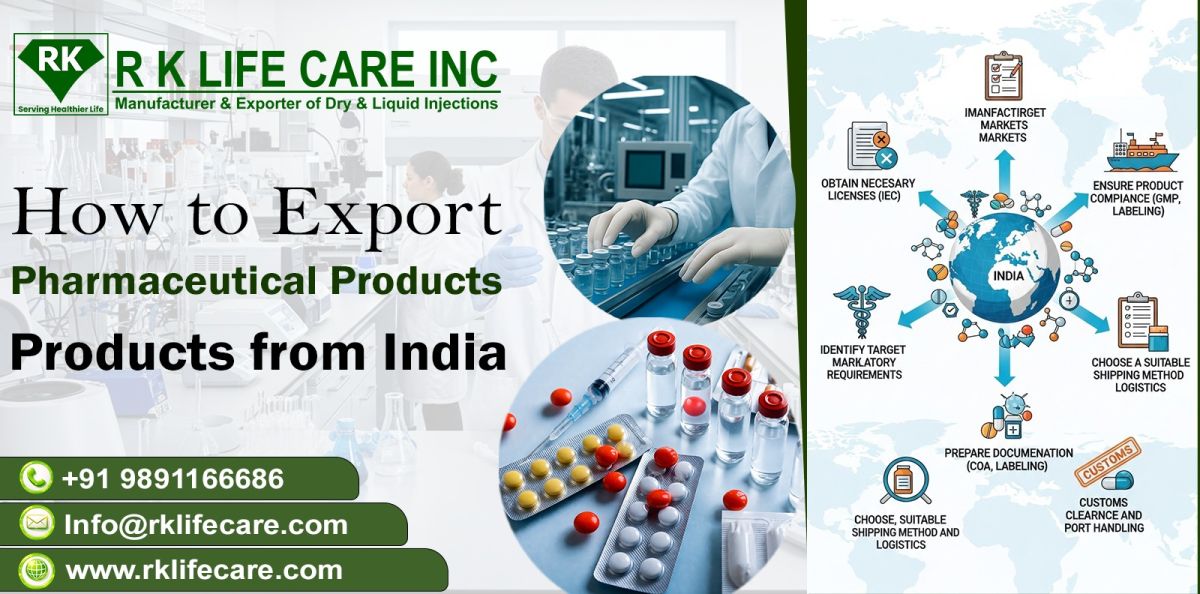
If you are thinking about entering the global pharma industry, one of the most practical and profitable opportunities today is pharmaceutical export from India. India is already known as the “pharmacy of the world,” but behind this title lies a structured system of manufacturing, compliance, and international trade.
Imagine this: a buyer in Africa needs affordable life-saving medicines, and a supplier in India fulfills that demand. This is how the global pharmaceutical export chain works—but entering this market requires proper knowledge, licensing, and planning.
This guide explains everything in a simple, step-by-step, and more explanatory way.
Why Pharmaceutical Export from India is Growing Rapidly
India plays a major role in global healthcare. Many countries depend on India for affordable and high-quality medicines.
Key reasons for growth:
- India produces low-cost generic medicines
- Strong manufacturing infrastructure with WHO-GMP facilities
- High global trust in Indian pharmaceutical quality
- great demand from developing countries
Because of these factors, the medicine export business from India continues to expand every year, creating opportunities for new exporters.
Step 1: Understanding Your Target Market
Before starting the export process, you must clearly understand where you want to sell your products.
Different countries have different healthcare needs and regulations.
For example:
- African countries often require affordable generic medicines
- Southeast Asia focuses on both generics and branded generics
- Latin America has strict but stable regulatory systems
So, market research is not just important—it is the foundation of your entire business.
You should study:
- Demand for medicines in that country
- Import regulations and approvals
- Competition and pricing structure
Step 2: Legal Setup and Required Registrations
To legally start pharmaceutical export from India, you must complete certain registrations.
These include:
- Import Export Code (IEC): Mandatory for all export businesses
- GST Registration: Required for taxation compliance
- Drug License: Issued by CDSCO or State Authorities
Without these approvals, you cannot legally export medicines.
Additionally, registering with Pharmexcil is highly beneficial because it provides guidance, export policies, and international trade opportunities.
Step 3: Selecting the Right Pharmaceutical Products
Choosing the right products is one of the most important decisions in the Indian medicine export business.
Commonly exported categories include:
- Generic tablets and capsules
- Over-the-counter (OTC) medicines
- Nutraceutical products
- Active Pharmaceutical Ingredients (APIs)
However, selection is not only about demand. You must also ensure:
- The product is approved for export
- Meets international quality standards
- Has proper stability and safety documentation
A wrong product selection can delay approvals or even lead to rejection in foreign markets.
Step 4: Working with Reliable Manufacturers
Most exporters do not manufacture medicines themselves. Instead, they depend on certified pharmaceutical manufacturers.
This is where experienced companies like Rk Life Care Inc play an important role by supporting exporters with production, compliance, and documentation assistance.
When choosing a manufacturing partner, you should carefully check:
- WHO-GMP certification
- Production capacity
- Export experience
- Quality control systems
A strong manufacturer ensures your business runs smoothly without quality or compliance issues.
Step 5: Documentation and Compliance Process
Documentation is one of the most critical parts of exporting medicines from India.
Every shipment requires proper paperwork, such as:
- Commercial Invoice (product details and pricing)
- Packing List (shipment contents)
- Certificate of Origin (country verification)
- Bill of Lading or Airway Bill (transport proof)
- COPP (Certificate of Pharmaceutical Product)
Some countries also require product registration before shipment, which can take weeks or even months. That’s why planning and patience are essential in this industry.
Step 6: Logistics and Cold Chain Management
Pharmaceutical products are sensitive and must be handled carefully during transportation.
Certain medicines require temperature-controlled environments, known as cold chain logistics.
This includes:
- Maintaining storage temperature during shipping
- Using specialized packaging materials
- Tracking shipments in real time
A small mistake in logistics can affect product quality, so working with experienced freight partners is very important.
Step 7: Pricing Strategy and Payment Methods
Pricing in the pharmaceutical export business from India depends on multiple cost factors.
These include:
- Manufacturing cost
- Packaging and branding
- Freight charges
- Import duties in the destination country
Payment methods commonly used are:
- Letter of Credit (LC) – safest for exporters
- Advance Payment – suitable for new businesses
- Documents Against Payment (DAP)
Choosing the right payment method reduces financial risk and ensures secure transactions.
Step 8: Building Long-Term International Relationships
Export business is not just about selling products—it is about building trust.
Successful exporters focus on:
- Consistent product quality
- On-time delivery
- Transparent communication
You can find buyers through:
- International pharma trade fairs
- B2B platforms
- Global distributor networks
Once trust is built, buyers continue long-term partnerships, which is essential for stable business growth.
Common Challenges in Pharma Export
Like any international business, pharmaceutical export also has challenges:
- Strict global regulations
- High competition from other countries
- Currency fluctuations
- Delay in approvals and registrations
However, with proper planning and compliance, these challenges can be managed effectively.
Final Thoughts
Starting a pharmaceutical export business from India is not a quick process, but it is a highly rewarding one if done correctly.
The key success factors are:
- Strong market understanding
- Reliable manufacturing partners
- Proper documentation
- Strict quality compliance
If you follow these steps carefully, you can build a strong presence in the global pharmaceutical market and scale your business over time.
Comments
No comments yet. Be the first to share your thoughts!
Leave a Comment