
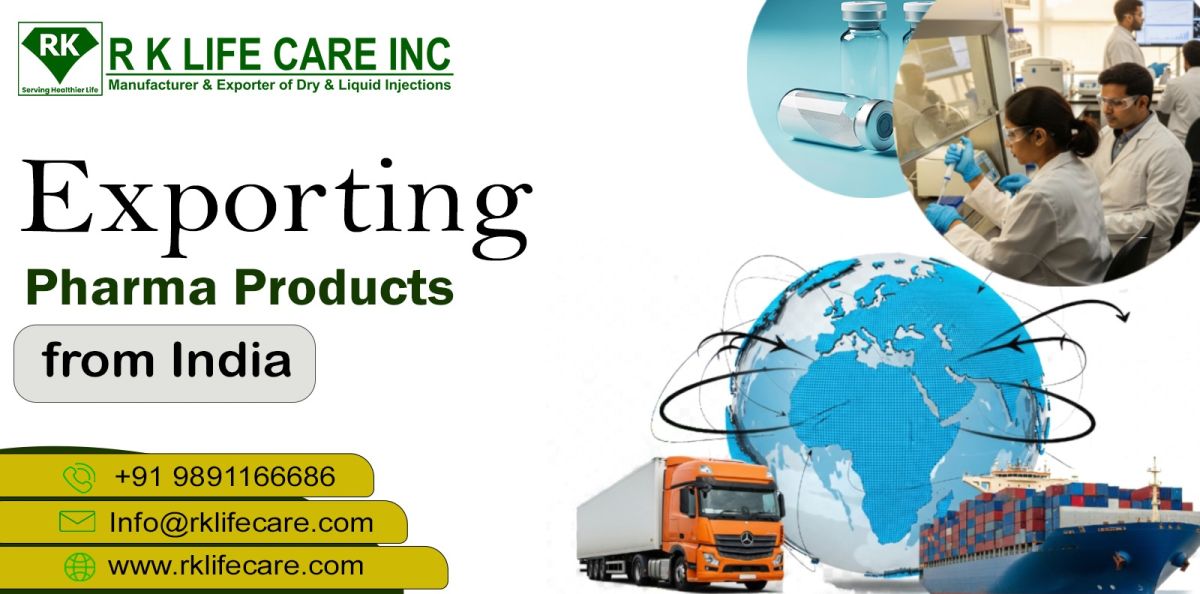
India is globally known as the “pharmacy of the world” due to its large-scale manufacturing and export of affordable pharmaceutical products. With exports reaching over 200+ countries, India plays a vital role in supplying high-quality medicines, vaccines, and active pharmaceutical ingredients (APIs) to the global healthcare system.
The pharmaceutical export sector from India is growing rapidly due to strong production capabilities, regulatory compliance, and rising global demand for cost-effective healthcare solutions.
Why India is a Global Leader in Pharma Exports
India’s dominance in pharmaceutical exports is driven by:
- Low-cost manufacturing with global quality standards
- Skilled pharmaceutical workforce and R&D expertise
- WHO-GMP, US FDA, and EU-approved production facilities
- Strong API (Active Pharmaceutical Ingredient) manufacturing base
- Ability to produce large volumes at competitive pricing
India plays a critical role in supplying essential medicines to developing regions such as Africa, Southeast Asia, and Latin America.
Major Pharmaceutical Products Exported from India
1. Generic Medicines
Tablets, capsules, syrups, and injectables dominate global exports due to affordability and availability.
2. Active Pharmaceutical Ingredients (APIs)
India is one of the largest global suppliers of raw materials used in drug manufacturing.
3. Vaccines & Biologics
India contributes significantly to global immunization programs and emergency healthcare needs.
4. Ayurvedic & Herbal Products
Traditional Indian healthcare systems are gaining international acceptance and demand.
5. Medical Devices
Products like surgical instruments, diagnostic kits, and hospital equipment are expanding rapidly in export markets.
Step-by-Step Process of Exporting Pharma Products from India
Step 1: Market Research & Product Selection
Understanding demand, competition, and regulations in target countries is the foundation of export success.
Step 2: Regulatory Compliance
Mandatory approvals include:
- WHO-GMP certification
- Drug Export License (CDSCO)
- DGFT registration
- Product approval in the importing country
Step 3: Manufacturing & Quality Assurance
Strict quality checks ensure:
- Safety
- Purity
- Stability
- Effectiveness
Step 4: Documentation
Key documents include:
- Commercial Invoice
- Packing List
- Certificate of Analysis (COA)
- Shipping Bill
- Export Health Certificate
Step 5: Logistics & Cold Chain
Temperature-sensitive medicines require specialized cold chain logistics to maintain product integrity.
Step 6: Customs Clearance
Final clearance is completed in both exporting and importing countries before shipment delivery.
Top Global Markets for Indian Pharma Exports
India exports pharmaceutical products to:
- United States
- United Kingdom
- South Africa
- Brazil
- Russia
- United Arab Emirates
- Southeast Asia
The United States remains the largest importer of Indian generic medicines, contributing significantly to export revenue.
Challenges in Pharmaceutical Export Business
Despite strong growth, exporters face key challenges:
- Strict and varying international regulations
- High documentation and compliance requirements
- Price competition from global manufacturers
- Logistics delays and customs inspections
- Maintaining temperature-sensitive product quality
- Role of Export Ecosystem in the Pharma Industry
The pharmaceutical export system depends on coordination between manufacturers, logistics providers, and regulatory experts.
In this ecosystem, companies like Rk Life Care Inc assist in streamlining sourcing, coordination, and export facilitation. Their role helps ensure proper documentation handling, compliance alignment, and smooth international delivery operations within the pharmaceutical supply chain.
Growth of the Indian Pharmaceutical Export Industry (2026 Outlook)
India’s pharmaceutical exports are currently valued at $25–30 billion annually and continue to show strong upward growth.
Key Growth Drivers:
- Increasing global demand for affordable generics
- Expansion of healthcare infrastructure in developing countries
- Rising vaccine exports
- Government support through export-friendly policies
- Growth in biotechnology and specialty medicines
Future Outlook:
Digital transformation, AI-based supply chain tracking, and automation in logistics are improving transparency and efficiency in global pharma trade.
Additional Insights: Emerging Trends in Pharma Exports
1. Rise of Biosimilars
Demand for biosimilars is increasing globally as cost-effective alternatives to expensive biologics.
2. Digital Pharma Trade
E-commerce and B2B pharma platforms are making international trade faster and more transparent.
3. Regulatory Digitization
Many countries are adopting digital approval systems for faster drug registrations.
4. Sustainability in Pharma Packaging
Eco-friendly packaging is becoming a requirement in several global markets.
Export Documentation Mistakes to Avoid
Many exporters face delays due to small errors. Common mistakes include:
- Incorrect HS code classification
- Missing certificates or approvals
- Improper labeling on packaging
- Incomplete shipping documentation
- Non-compliance with importing country regulations
Avoiding these ensures smoother export operations.
Conclusion
Exporting pharmaceutical products from India is a highly structured and globally significant business opportunity. India’s strong manufacturing ecosystem, regulatory compliance standards, and reputation for affordable generic medicines make it a dominant force in global healthcare supply.
However, long-term success depends on quality assurance, accurate documentation, and strong international partnerships.
As global healthcare needs continue to expand, India’s pharmaceutical export industry will remain a key driver of accessible and affordable medicines worldwide.
Comments
No comments yet. Be the first to share your thoughts!
Leave a Comment