
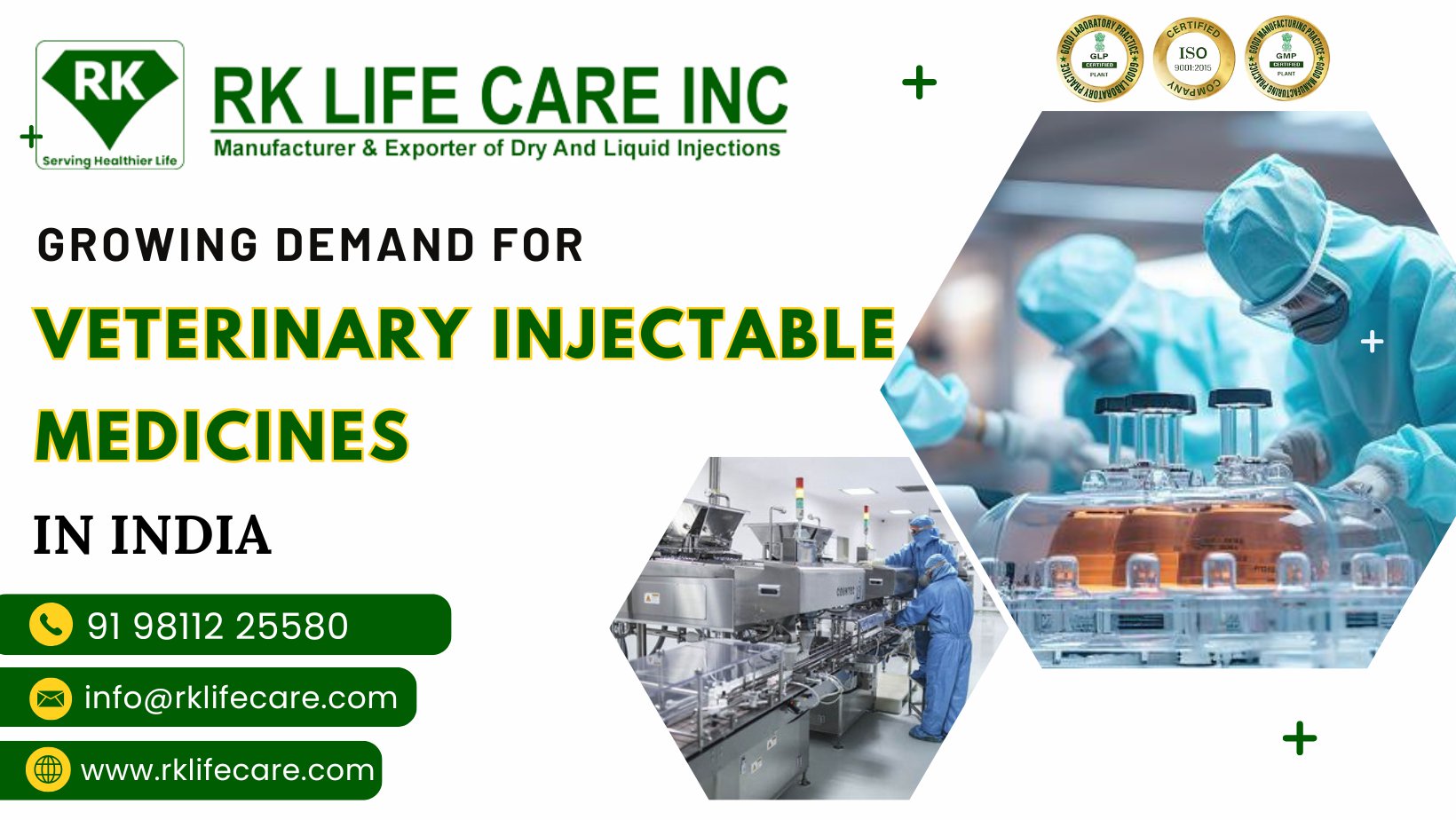
India’s veterinary healthcare sector is undergoing a rapid transformation, driven by rising livestock populations, increased awareness of animal health, and government-backed disease control programs. Among various product categories, veterinary injectable medicines have emerged as a dominant and fast-growing segment. For companies like RK Life Care Inc, this trend presents a significant opportunity to expand and innovate in a highly promising market.
Expanding Veterinary Healthcare Market in India
India is home to one of the largest livestock populations in the world, exceeding 536 million animals. This vast base supports millions of rural households and contributes significantly to the country’s agricultural economy. As a result, the demand for effective veterinary healthcare solutions continues to grow steadily.
The overall veterinary medicine market in India is projected to reach approximately USD 4.17 billion by 2033, growing at a CAGR of over 10%. This growth is fueled by increasing consumption of animal-derived products such as milk, meat, and eggs, along with rising pet ownership in urban areas.
Within this expanding market, injectable medicines have secured a leading position due to their effectiveness and rapid therapeutic action.
Why Injectable Veterinary Medicines Are in High Demand
Injectable formulations have become the preferred choice among veterinarians and livestock owners for several reasons:
1. Fast Action and High Bioavailability
Injectable medicines provide quicker absorption into the bloodstream compared to oral or topical treatments. This makes them highly effective in treating acute infections and emergencies.
2. Precision in Dosage
Accurate dosing is critical in veterinary care, especially for large animals like cattle and buffalo. Injectable drugs ensure controlled and precise administration.
3. Better Compliance and Long-lasting Effects
Many injectable formulations offer sustained-release benefits, reducing the need for frequent dosing and improving treatment outcomes.
Due to these advantages, the injectable segment accounted for nearly 49% of the veterinary medicine market share in 2024 and continues to dominate. Additionally, studies indicate that injectables represent around 45% of the animal drug market, reflecting their widespread adoption.
Key Growth Drivers in India
Several macro and micro factors are accelerating the demand for veterinary injectable medicines:
1. Rising Incidence of Animal Diseases
Frequent outbreaks of diseases such as foot-and-mouth disease (FMD), lumpy skin disease, and parasitic infections have increased the need for immediate and effective treatments. Injectable antibiotics, vaccines, and anti-parasitic drugs play a crucial role in controlling these conditions.
2. Government Initiatives and Vaccination Programs
Government-led programs like the National Animal Disease Control Programme (NADCP) are significantly boosting the use of injectable vaccines. Massive immunization drives—such as the administration of over 114 crore FMD vaccine doses—highlight the scale of demand.
Such initiatives not only improve animal health but also create long-term demand for pharmaceutical manufacturers.
3. Shift Toward Preventive Healthcare
Farmers and livestock owners are increasingly adopting preventive healthcare practices to enhance productivity and reduce losses. Vaccines and prophylactic injectables are becoming essential tools in maintaining herd health.
4. Growth in Dairy and Poultry Sectors
India’s dairy and poultry industries are expanding rapidly to meet rising protein consumption. Healthy livestock directly impacts productivity, making veterinary injectables indispensable for disease prevention and treatment.
5. Increasing Pet Ownership
Urbanization and changing lifestyles have led to a surge in pet ownership. Companion animals require regular vaccinations and treatments, further driving demand for injectable medicines.
Opportunities for RK Life Care Inc
For RK Life Care Inc, the growing demand for veterinary injectables opens multiple avenues for growth and differentiation:
1. Product Innovation
Developing advanced injectable formulations such as long-acting antibiotics, combination therapies, and biologics can help the company stand out in a competitive market.
2. Expanding Distribution Networks
India’s rural landscape requires strong distribution channels. Building partnerships with veterinarians, clinics, and agri-retail outlets can enhance market reach.
3. Focus on Quality and Compliance
With increasing regulatory oversight and platforms aimed at streamlining approvals, maintaining high-quality standards is essential for sustained growth.
4. Targeting the Preventive Healthcare Segment
Investing in vaccines and preventive injectables can position RK Life Care Inc as a key player in government and private immunization programs.
5. Farmer Awareness and Education
Educating farmers about the benefits of injectable medicines—such as faster recovery and reduced mortality—can drive adoption and brand loyalty.
Challenges to Address
While the market offers strong growth potential, companies must also navigate certain challenges:
- Limited veterinary infrastructure in rural areas
- Price sensitivity among farmers
- Need for cold chain logistics for vaccines
- Competition from established domestic and global players
Addressing these challenges through innovation, affordability, and accessibility will be critical for long-term success.
Conclusion
The demand for veterinary injectables in India is on a strong upward trajectory, supported by a growing livestock economy, rising disease prevalence, and proactive government initiatives. Injectable formulations, with their superior efficacy and reliability, have become the backbone of modern veterinary treatment.
For RK Life Care Inc, this evolving landscape presents a golden opportunity to strengthen its presence in the veterinary pharmaceutical sector. By focusing on innovation, quality, and strategic market expansion, the company can capitalize on this demand and contribute to improving animal health across India.
As the industry continues to evolve, veterinary injectables will remain at the forefront—driving better health outcomes for animals and greater economic benefits for farmers and stakeholders alike.
Comments
No comments yet. Be the first to share your thoughts!
Leave a Comment